Imagine having a beautiful vanity table that lights up your face perfectly every time you sit down. You don’t have to spend a fortune or settle for something that doesn’t fit your style.
What if you could make your own vanity table with lights, tailored exactly to your space and taste? In this guide, you’ll discover simple steps to create a stunning, well-lit vanity that makes getting ready a joy. Ready to transform your daily routine and add a touch of glam to your room?
Keep reading—you’re about to unlock the secrets to crafting your perfect vanity table with lights.
Choosing Materials
Making your own vanity table with lights needs careful material choices. Good materials help your table look nice and last long.
Focus on wood type, light fixtures, and tools before starting your project. This guide helps you pick the best materials.
Selecting The Right Wood
Choose wood that is strong and easy to work with. Popular options include pine, oak, and plywood. Pine is softer and easier to cut. Oak is very strong but harder to shape. Plywood offers a smooth surface and is affordable.
- Check for wood without cracks or knots
- Pick wood that suits your room style
- Consider wood thickness for stability
- Sand the wood to smooth rough spots
Picking Light Fixtures
Lights make your vanity table useful and stylish. Choose lights that give soft, even brightness. LED bulbs save energy and last long.
| Light Type | Brightness | Energy Use |
| LED Strip Lights | Soft, even | Low |
| Vanity Bulbs | Bright, focused | Medium |
| Fairy Lights | Decorative | Very low |
Gathering Tools And Supplies
Having the right tools makes building easier and safer. Basic tools include a saw, drill, screwdriver, and sandpaper. You also need screws, wood glue, and paint or varnish.
- Electric drill with bits
- Hand saw or circular saw
- Measuring tape and pencil
- Screwdriver set
- Sandpaper (various grits)
- Wood glue and screws
- Paintbrush and finish

Credit: vanitii.co.uk
Designing Your Vanity
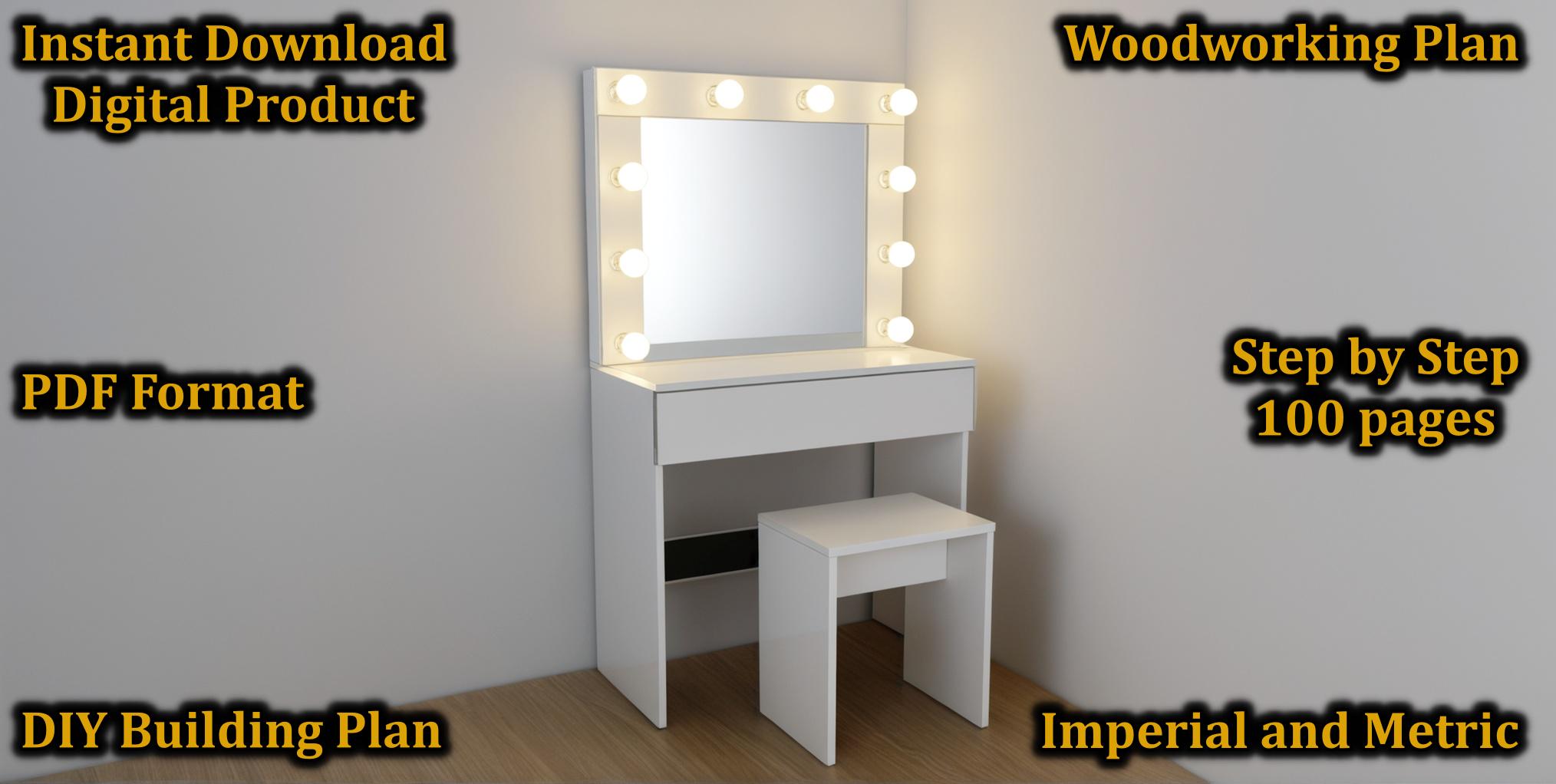
Creating a vanity table with lights can be a fun project. It can add style and function to your room.
Before you start, it’s important to plan how your vanity will look. Think about the design that fits your space and needs.
Sketching The Layout
Draw your vanity design on paper. This helps you see how everything fits together.
Include spaces for your items, like makeup and brushes. Consider adding drawers or shelves for storage.
- Decide where the mirror will go
- Think about the height of the table
- Plan for a comfortable seating area
Planning Light Placement
Good lighting is key for a vanity. Plan where to place the lights around your mirror.
Use lights that give you clear visibility. Consider LED lights for a bright and natural effect.
- Place lights at eye level
- Avoid shadows by using multiple lights
- Choose a soft white light for a natural look
Sizing And Dimensions
Measure your space before building. This ensures your vanity fits well in your room.
Keep the table height comfortable for sitting. Ensure enough space for your legs underneath.
| Part | Recommended Size |
| Table Height | 28 to 30 inches |
| Mirror Width | At least 20 inches |
| Chair Height | 18 inches |
Building The Frame
Making a vanity table with lights starts with building a strong frame. This frame supports the tabletop, drawers, and lights. It must be sturdy and well-measured.
In this guide, we focus on cutting wood, assembling parts, adding storage, and finishing the surface. Each step helps create a practical and beautiful vanity table.
Cutting And Assembling Wood
Start by selecting good quality wood boards. Measure and mark each piece carefully. Use a saw to cut the wood for the table legs, frame sides, and top support.
- Measure the height and width for the table frame.
- Cut four legs to the same length.
- Cut side supports for stability between legs.
- Cut a top frame to hold the tabletop securely.
- Check all pieces for smooth edges before assembly.
Use wood glue and screws to join the legs and supports. Make sure the frame is square and stable before tightening all screws.
Creating Drawers And Storage
Drawers add useful storage to your vanity table. Cut wood panels for drawer fronts, backs, sides, and bottoms. Assemble them with wood glue and nails.
| Drawer Part | Material | Size Notes |
|---|---|---|
| Front panel | Solid wood | Match table width |
| Back panel | Plywood | Same height as front |
| Side panels | Solid wood | Depth of drawer |
| Bottom panel | Plywood | Fits inside sides |
Install drawer slides inside the frame. Test that drawers open and close smoothly before moving on.
Sanding And Finishing
Sand all wooden surfaces to remove rough spots and splinters. Use medium then fine grit sandpaper for a smooth finish.
- Sand the legs and frame edges.
- Sand drawer fronts and sides carefully.
- Wipe dust off with a clean cloth.
- Apply primer or wood conditioner.
- Paint or stain as desired.
- Seal with a clear protective finish.
Let the finish dry completely before attaching lights or other accessories. This step protects the wood and enhances the look of your vanity table.
Credit: www.etsy.com
Installing Lights
Adding lights to your vanity table can improve your makeup routine. Proper installation is key for safety and good lighting.
This guide covers wiring, attaching bulbs, and testing your lights for the best results.
Wiring And Safety Tips
Use wires rated for your light bulbs’ power. Avoid overloading circuits to prevent hazards.
- Turn off power before starting wiring
- Use insulated wires and connectors
- Secure wires away from sharp edges
- Check all connections are tight and safe
- Test wiring with a voltage tester before use
Attaching Light Bulbs
Choose bulbs that fit your vanity’s sockets and size limits. Handle bulbs gently to avoid damage.
| Bulb Type | Recommended Wattage | Socket Type |
| LED | 5-10 Watts | E12 or E14 |
| Incandescent | 15-25 Watts | E12 or E14 |
| Fluorescent | 8-15 Watts | G9 or GU10 |
Testing And Adjustments
After installing bulbs, turn on the power and check each light. Look for flickering or dim bulbs.
- Switch on the vanity lights
- Inspect each bulb for brightness
- Adjust bulb positions for even light spread
- Replace any faulty bulbs immediately
- Secure all fixtures and wires once testing is complete

Credit: www.amazon.com
Frequently Asked Questions
How Do I Start Building A Vanity Table With Lights?
Begin by choosing a sturdy tabletop and frame. Next, select LED strip or bulb lights for even illumination. Measure and mark light placements. Drill holes or attach clips for lights. Finally, assemble and secure all parts carefully for a functional vanity table.
What Materials Are Best For A Diy Vanity Table?
Use wood or MDF for the table base and top due to durability. Choose LED lights for energy efficiency and brightness. Use screws, brackets, and adhesive clips for assembly. Pick a mirror with good reflectivity and size for your space.
How Can I Install Lights Safely On My Vanity Table?
Use low-voltage LED lights to reduce electrical risks. Secure wires neatly with clips or channels. Avoid overloading outlets and use a surge protector. Test all connections before final installation. Always follow manufacturer instructions for electrical safety.
What Type Of Lighting Is Ideal For Makeup Application?
Choose daylight LED bulbs with a color temperature of 5000K to 6500K. This lighting mimics natural sunlight and shows true colors. Avoid yellow or warm lights as they distort makeup shades. Ensure even light distribution to prevent shadows.
Conclusion
Creating your own vanity table with lights is a fun and rewarding project. It adds style and practical lighting to your space. You can customize it to fit your needs and room size. Using simple tools and materials makes the process easy.
Enjoy the satisfaction of a personalized vanity that brightens your daily routine. Try this project to make your room more beautiful and functional.