Are you thinking about adding a bunk bed to your space but unsure how much room it will actually take? Knowing exactly how big a bunk bed is can save you from tight squeezes and awkward setups.
Whether you’re planning a kids’ room, a guest space, or just want to maximize every inch, understanding the size details is key. Keep reading, and you’ll discover everything you need to pick the perfect bunk bed that fits your space—and your lifestyle—just right.

Credit: www.amazon.ca
Standard Bunk Bed Sizes
Bunk beds save space and offer two beds in one frame. They come in several standard sizes. Each size fits different mattress measurements. Knowing the size helps you plan room space well.
Below are common bunk bed sizes with details about their dimensions and uses. This guide covers twin over twin, twin over full, and full over full bunk beds.
Twin Over Twin
The twin over twin bunk bed is the most popular type. Both beds use standard twin mattresses. It fits well in small rooms and is perfect for children.
- Standard twin mattress size: 39 inches wide by 75 inches long
- Overall bunk bed height: around 65 to 70 inches
- Good for kids’ rooms or guest rooms
Twin Over Full
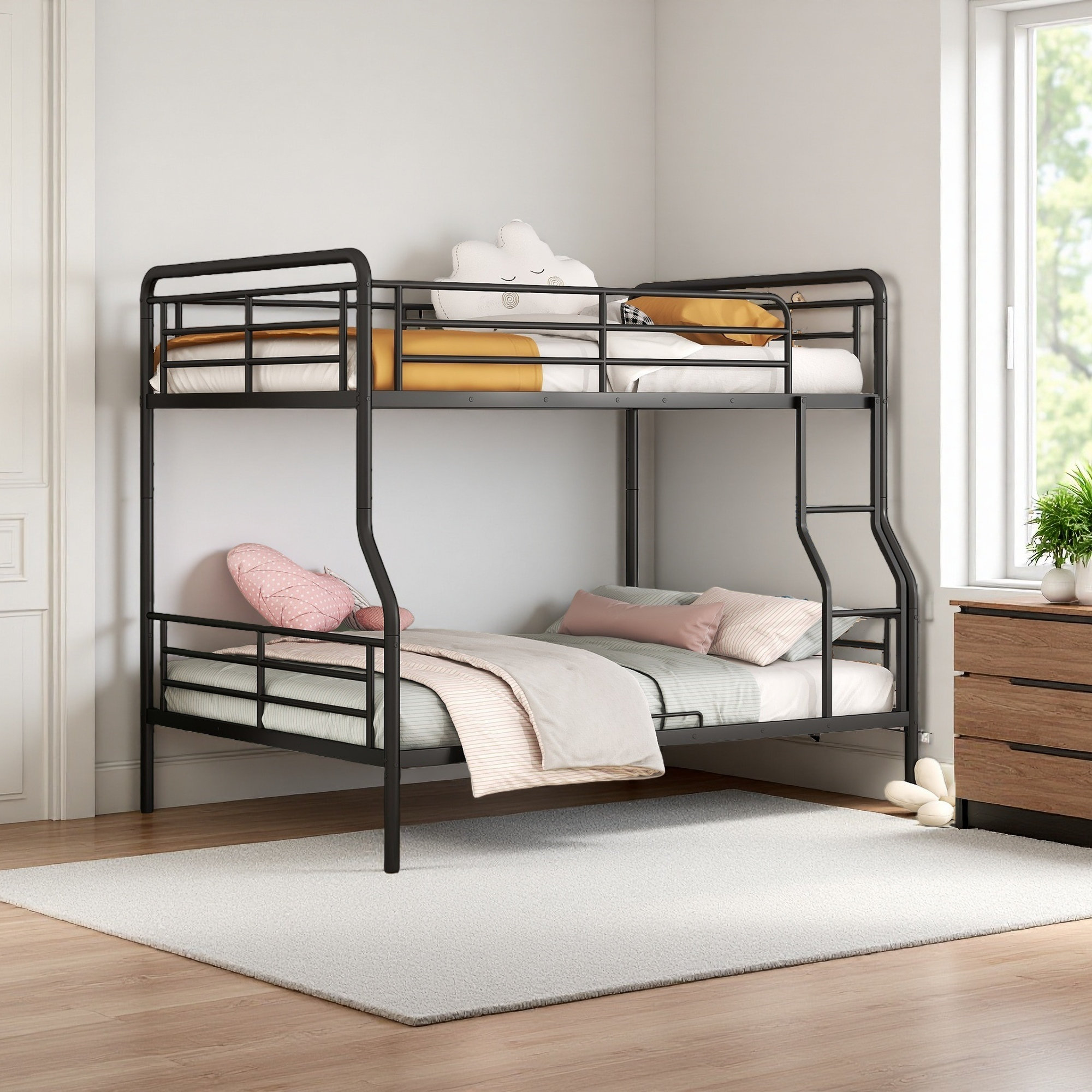
The twin over full bunk bed holds a twin mattress on top and a full mattress below. This offers more sleeping space on the bottom bed.
| Bed Position | Mattress Size (inches) | Width (inches) | Length (inches) |
|---|---|---|---|
| Top (Twin) | 39 x 75 | 39 | 75 |
| Bottom (Full) | 54 x 75 | 54 | 75 |
The full mattress is wider, making the bottom bed more comfortable for adults or two children. These beds need a larger room than twin over twin types.
Full Over Full
Full over full bunk beds feature two full-size mattresses. These beds provide maximum sleeping space in one frame.
| Bed Level | Standard Mattress Size (inches) | Width (inches) | Length (inches) |
|---|---|---|---|
| Top Bed | 54 x 75 | 54 | 75 |
| Bottom Bed | 54 x 75 | 54 | 75 |
These bunk beds work well for siblings or guests who need more room. They require more floor space and a sturdy frame to hold the weight.
Measuring Your Room For Bunk Beds
Buying a bunk bed is exciting but requires careful planning. The first step is measuring your room to ensure the bunk bed fits perfectly.
Consider the size of the room, safety space, and ceiling height. These factors are important to ensure a comfortable and safe setup.
Room Dimensions To Consider
Measure the room to know how much space you have. This will help you choose the right size bunk bed.
- Measure the length and width of the room.
- Check for any obstructions like doors or windows.
- Ensure there is enough space to move around.
Clearance And Safety Space
It’s important to leave some clearance space around the bunk bed. This helps prevent accidents and allows for easy access.
Ensure there is space between the bed and walls or furniture. This clearance ensures safety and convenience.
Ceiling Height Requirements
Ceiling height is crucial for bunk beds. Measure from the floor to the ceiling to ensure enough space above the top bunk.
- Allow at least two feet of space above the top bunk.
- Consider the thickness of the mattress in your measurements.
- Avoid rooms with low ceilings for safety.
Specialty Bunk Bed Dimensions
Bunk beds come in many shapes and sizes. Specialty bunk beds fit different needs and spaces. Knowing their dimensions helps with planning room layouts.
This guide covers common types: loft beds, L-shaped bunk beds, and triple or custom bunk beds. Each type has unique size features.
Loft Beds
Loft beds raise the sleeping area off the floor. This frees space underneath for desks, storage, or play areas. Their height and length vary by design.
- Typical height: 60 to 72 inches (5 to 6 feet)
- Standard length: about 80 inches (6 feet 8 inches)
- Width usually matches twin mattress size: 39 inches
- Some loft beds fit full or larger mattresses, increasing width to 54 inches or more
L-shaped Bunk Beds
L-shaped bunk beds have two beds arranged in an L shape. This fits corner spaces and can separate sleeping areas.
| Dimension | Measurement |
|---|---|
| Height | 65 to 70 inches |
| Length (long side) | 80 to 85 inches |
| Length (short side) | 60 to 65 inches |
| Width | 40 to 45 inches |
These beds often use twin mattresses. Some models allow full mattress sizes, changing the width and length.
Triple And Custom Bunk Beds
Triple bunk beds hold three sleepers. Custom bunk beds can have unique shapes or mattress sizes.
- Triple bunk beds usually stack beds vertically or in a staggered layout
- Height ranges from 70 to 80 inches or more
- Length and width depend on mattress size and bed arrangement
- Custom beds vary widely, so measure each design carefully

Credit: www.titusfurniture.ca
Choosing The Right Bunk Bed Size
Picking the right bunk bed size is important for comfort and safety. It depends on who will use the bed and the space available.
This guide helps you choose a bunk bed that fits your needs and room well.
Age And Size Of Occupants
The size of the person using the bed affects the bunk bed size. Kids need smaller beds, while teens and adults need bigger ones.
| Age Group | Recommended Bed Size | Notes |
| Toddlers (2-5 years) | Twin | Use guardrails for safety |
| Children (6-12 years) | Twin or Twin XL | Twin XL offers more legroom |
| Teens and Adults | Full or Full XL | Check weight limits and height |
Room Functionality And Layout
Measure your room carefully. Bunk beds take vertical space but need enough floor area for access and other furniture.
- Check ceiling height to avoid head bumps
- Allow space for stairs or ladders
- Think about other furniture placement
- Keep pathways clear for easy movement
Additional Features And Storage
Some bunk beds include storage or desks. These can save space but affect bed size and layout.
| Feature | Effect on Size | Consideration |
|---|---|---|
| Built-in drawers | Wider base | Use if extra storage is needed |
| Under-bed desk | Takes floor space | Good for study areas |
| Trundle bed | Extra length | Allows an extra sleeping spot |
Credit: www.wayfair.ca
Frequently Asked Questions
How Big Is A Standard Bunk Bed?
A standard bunk bed typically measures 80 inches long and 42 inches wide. It fits standard twin mattresses, making it suitable for kids or small rooms.
What Are Common Bunk Bed Dimensions?
Common bunk bed sizes include twin-over-twin, full-over-full, and twin-over-full. Widths range from 42 to 56 inches, and lengths are usually 75 to 80 inches.
How Much Space Does A Bunk Bed Need?
A bunk bed requires a floor space of about 42 by 80 inches. Additional clearance for safety and room movement is recommended, around 2 to 3 feet extra.
Are Bunk Beds Suitable For Adults?
Yes, full-over-full bunk beds can accommodate adults. They offer larger mattress sizes and higher weight limits than standard twin bunk beds.
Conclusion
Bunk beds come in many sizes to fit different rooms and needs. They save space and provide two sleeping spots in one. Knowing the size helps you plan your room better. Choose a bunk bed that fits well without crowding the space.
Measure your room carefully before buying. This way, you get comfort and style in one piece. Bunk beds are practical and fun for kids and adults alike. Think about your space and needs to find the best fit.